
Raccoon Diseases: What Wisconsin Homeowners Should Know Before DIY Removal
Raccoon diseases are a real health concern for Wisconsin homeowners, and knowing the risks before attempting any do-it-yourself removal can protect your family and your property. Walworth County, WI, home to Lake Geneva and its lakefront communities, wooded shorelines, and neighborhoods, offers prime raccoon habitat year-round, with dense tree cover, water access, and easy food like garbage cans and garden beds. If a raccoon has found its way into your attic, under your deck, or around your yard, the health risks go well beyond a bite or scratch.
Three Diseases Raccoons Commonly Carry in Wisconsin
Baylisascaris Roundworm
About half of all raccoons tested in Wisconsin carry Baylisascaris procyonis, and rates are higher in the southern part of the state, including Walworth County. Adult worms in raccoon intestines release parasitic eggs in feces, which contaminate soil and vegetation and remain viable for extended periods.
Symptoms range from a mild rash to paralysis or coma, and no drug has been found completely effective against Baylisascaris infection. Children are most at risk because they touch contaminated soil and put their hands near their mouths.
Leptospirosis
Leptospirosis comes from Leptospira bacteria in raccoon urine, and infection occurs when contaminated water or soil contacts the skin, eyes, nose, or mouth. Symptoms include fever, severe muscle aches, and, in serious cases, liver and kidney failure. Dogs are especially at risk because they drink from puddles, so if raccoons have been using your yard as a latrine, your pets may be too.
Rabies
Rabies spreads through saliva and causes fever, muscle pain, fatigue, disorientation, and delirium. Wisconsin's raccoon rabies rates are lower than in eastern states, but the risk is real. A raccoon that appears disoriented, is active during daylight, or shows no fear of people may be sick, so never approach or handle it.
Why DIY Raccoon Removal Creates Serious Risks
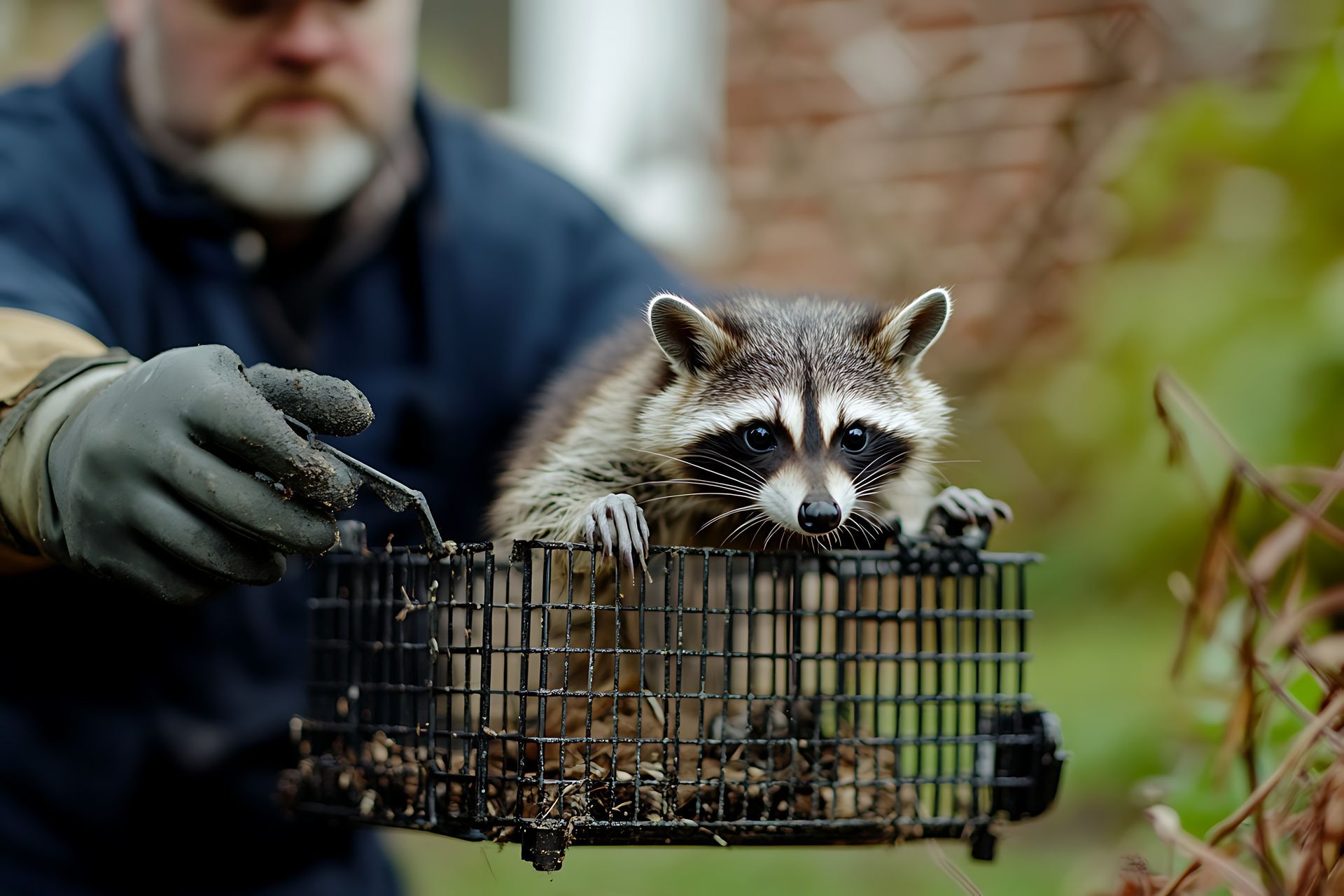
Most homeowners who picture removing a raccoon themselves imagine setting a cage trap, but handling a trap puts you in close contact with an animal that may be sick. Raccoons expose humans to disease through saliva, urine, feces, and bites or scratches.
There are practical hazards too. Baylisascaris eggs survive in traps and enclosures, so an empty trap can still be a contamination source without decontamination. Cleaning a latrine without protective equipment can release airborne particles from dried feces.
Wisconsin law also applies. Trapping is legal year-round on your own property without a DNR license, but Walworth County and the City of Lake Geneva may have ordinances affecting how trapped animals are transported or released. A licensed wildlife operator handles these requirements.
The biggest problem with DIY removal is that it rarely solves the root issue. Without a thorough inspection, entry points remain open and new animals return. Professional wildlife control addresses the conditions that made your property attractive in the first place.
Warning Signs Raccoons May Be on Your Property
Watch for these common signs of raccoon activity:
▸Knocked-over garbage cans or damaged garden beds, especially near wooded areas or the lakefront.
▸Scratching, thumping, or chattering sounds in the attic or walls, typically at night.
▸Strong ammonia-like odor from a crawlspace, attic, or under a deck.
▸Raccoon tracks in mud, garden soil, or near a water source.
▸Visible damage to roof vents, soffits, or fascia boards where an animal may have forced entry.
If you notice these signs, avoid handling droppings or nesting material without protective gear.
What Should I Do If I Find a Raccoon Latrine in My Attic?
Do not disturb it without personal protective equipment. Dried feces can contain Baylisascaris eggs that become airborne when disturbed. A licensed operator can inspect the area, remove contaminated material, and sanitize the space.
Are Raccoons in Lake Geneva, WI, a Year-Round Problem?
Yes. Raccoons in Walworth County are active year-round and do not truly hibernate. They slow down in the coldest weeks of winter but still seek warm shelter in attics, chimneys, and crawlspaces. Females look for den sites in late winter and early spring to give birth, so one raccoon can quickly become a family of six or more.
Can My Dog or Cat Get Sick from a Raccoon in the Yard?
Yes. Pets can catch leptospirosis, roundworm, and rabies from raccoons or their waste. Vaccinate cats, dogs, and ferrets against rabies and consider a leptospirosis vaccine for dogs. If your pet has had direct contact with a raccoon, contact your veterinarian promptly.
Call a Licensed Professional for Safe Raccoon Removal Serving Lake Geneva, WI
Raccoon removal near Lake Geneva, WI, is best handled by a licensed wildlife control operator who can safely trap, relocate, and exclude animals while protecting your family's health. All Wildlife Animal Eviction Wisconsin has been serving Walworth County and the surrounding region for over 40 years, handling raccoon problems in homes, attics, decks, crawlspaces, and vehicles. The team provides full property inspections to locate every entry point and offers repair services to seal them permanently.
If you have raccoons on your property, do not wait. Visit the raccoon removal service page to learn more, or contact the team to schedule an inspection. Call (262) 960-5705 any time. The team is available 24 hours a day, 7 days a week for wildlife emergencies. You can also find and review All Wildlife Animal Eviction Wisconsin on Google.